On the Ground Update: Rising Impacts of the Dry Season in Afar
3 March 2026
Valerie Browning
On behalf of the entire APDA team
As we all stand stunned by daily developments in the Gulf war, APDA is well aware that the Afar region remains largely in the shadows of global attention. Yet your continued care and partnership remind us that we are not alone.
For too long the Afar people have lived on the edge of conflict while also enduring a severe dry season. As I write in the early morning, clouds shift across the sky — but the promise of rain remains uncertain.
Despite the challenges, we remain deeply grateful for your support and friendship. Together we continue to hope and pray for a peaceful way forward.
Rising Impacts of the Dry Season
Having received well below average rain in 2025, herding communities across Afar are now reporting animal diseases and early signs of herd deaths. For pastoralist families, livestock are their primary source of food and income. Yet weakened animals, limited water sources, and disruptions caused by military movements are making survival increasingly difficult.
Since late 2023 there have been extensive livestock deaths. Goats are suffering from poor body condition and disease, and families often struggle to find water for their animals. In some areas, herders have even been separated from their livestock due to security pressures.
This has severely reduced the ability of families to sell animals in order to buy food when milk is no longer available. The number of goats required to exchange for 50 kilograms of flour continues to rise.
In the border community of Eli Da’ar, families have been living between two national armies since 2025. Movement is restricted, water is often inaccessible, and the nearest market is now up to 250 kilometres away in Logya or Samara. Many households simply no longer have animals to sell in exchange for the wheat flour they rely on to eat.
This crisis is now clearly reflected in malnutrition levels. A rapid nutrition screening conducted in February revealed that 46% of pregnant and breastfeeding mothers across five isolated kebeles were suffering from malnutrition along with many of their children.
Further along the border in northern Afdeera, the situation is similar. In seven additional districts screened during the same month, maternal malnutrition remains extremely high. In Kilaalu district, south of Mille, where there is almost no service infrastructure, maternal malnutrition reached 61%.
Responding to Urgent Needs
With heartfelt gratitude to those who provided support earlier this year, APDA has begun delivering assistance to the communities most affected.
Current support includes:
• Three food staples — wheat flour, chickpea flour and cooking oil — distributed to over 2,600 people for two months
• Locally produced concentrated animal feed and veterinary medications supporting 2,667 households to maintain five milking goats during the critical dry months
• Supplementary nutrition support for 333 malnourished pregnant and breastfeeding mothers
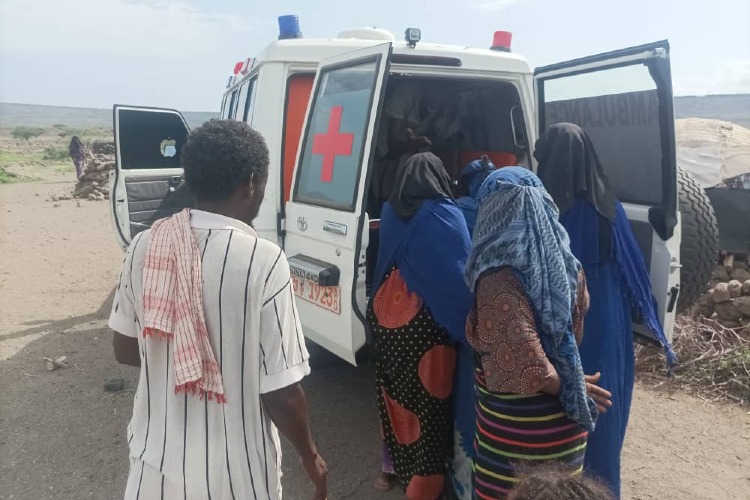
The Bureau of Health continues supplying APDA with therapeutic food for malnourished children under five, commonly known as ‘Plumpy’Nut’. APDA health workers travel on foot between remote communities, measuring children and mothers using mid-upper arm circumference and providing immediate treatment where malnutrition is identified.
Despite these efforts, much greater assistance is still needed across the region.
Strengthening Community Resilience
Alongside emergency aid, APDA remains committed to helping communities maintain their independence wherever possible. One approach has been supporting pastoralists to purchase locally produced animal feed at production cost if they are able.
This strategy helps protect livestock from drought deterioration while encouraging communities to support one another and maintain traditional coping systems during difficult seasons.
Meanwhile, two of the driest districts in Afar — Kori and Bidu — are urgently requesting support for fuel for their water tankers. The cost of operating two trucks daily for one month is 12,045 USD.
Without this assistance, some communities are walking up to 12 hours to collect water. As temperatures continue to rise, there is a real risk that people, especially children, could die from thirst.
Waiting for Rain
As the cool winter season fades, the skies now show thin cloud cover during the early mornings. Forecasts suggest light rain may arrive later in March and into April.
If the rivers flowing from the Ethiopian Highlands bring water and traditional wells refill, this may relieve the immediate thirst many communities are enduring. However, the worsening hunger and malnutrition already spreading across the region will not easily be resolved.
Supporting Women Facing Displacement
In southern Afar, particularly in Yanguddi and Sibaybi, many women have lived in displacement for nearly two years. Some have lost husbands in conflict, while others remain separated from family members serving on frontlines.
These women are now left to raise their children alone with very small herds and limited resources. Many describe feeling confined to their homes with few opportunities to support their families.
Traditionally, Afar women weave mats and containers from the dried leaves of the doma palm. They often weave while walking with their animals, producing beautiful household items that cover homes or serve as decorated containers.
APDA is exploring ways to help these women access the raw materials again and create pathways to market their weaving so they can regain a sense of purpose and income.
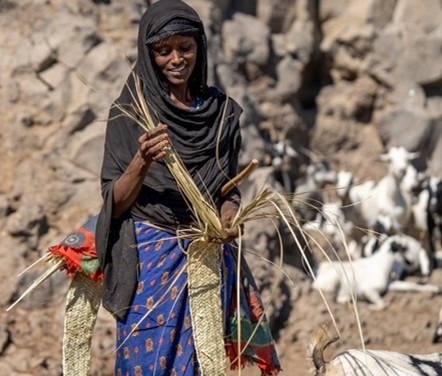
^ Here, the woman herding is weaving as she walks. This for them is as normal as crocheting and knitting for women in other countries. From this they make mats to cover houses as well as very beautiful household containers that they decorate with beads.
Growing Food in Unexpected Places
In an encouraging development, communities are now growing crops in areas once thought impossible for agriculture.
Near Yalli Bahe in Afdeera, almost 40 kilometres from the active Ert’Ale volcano — often described as the hottest inhabited place on Earth — water from a borehole is now being used to irrigate small food crops.
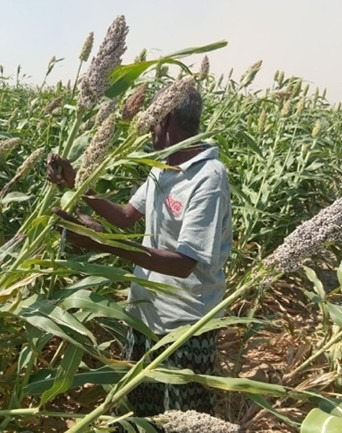
^ Pearl Millet, a particularly drought – resistant, high protein crop growing with minimum water and maturing in 70 days
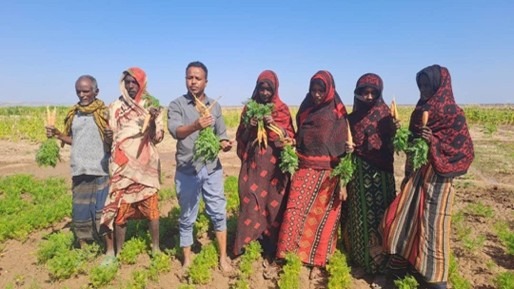
^ These women have grown carrots for the first time ever in another such plot 15 kilometers from Samara.
Improving Newborn Care
In other encouraging news, APDA’s Barbara May Maternity Hospital is expanding its ability to care for premature and vulnerable newborns.
A CPAP machine has recently been installed to support babies experiencing breathing difficulties after birth. The device gently pushes oxygenated air through small prongs in the baby’s nose, helping the lungs inflate during the critical first 48 to 72 hours.
Previously, babies requiring this treatment had to be transferred 90 kilometres away while their mothers remained recovering in Mille hospital.
Four hospital staff have now been trained to operate the equipment, marking the beginning of a dedicated newborn care unit.
With the continued support of partners and friends, APDA will keep working alongside Afar communities through these challenging times.
Thank you
Despite drought, conflict uncertainty and growing humanitarian needs, APDA continues to work alongside Afar communities every day.
None of this would be possible without the compassion and partnership of supporters around the world.
Thank you for standing with Afar families.