
On the Ground: Afar Communities Prepare for a Prolonged Drought
7 September 2026
In Ethiopia’s Afar Region, communities are facing an increasingly difficult dry season and the possibility that meaningful rain may not arrive until mid-2027.
Temperatures are still reaching the 40s, winds are stripping away any remaining moisture, and livestock are becoming increasingly weak and vulnerable to disease.
For pastoralist communities, this is more than a lack of rain. Water means survival, and livestock are the lifeblood of Afar society.
“Without them, Afar are not Afar.”
These words, shared by a clan leader during recent community meetings, capture just how deeply livestock are connected to food, income and identity across the region.
Listening to communities on the frontline
With the threat of an extended El Niño period looming, the Afar Pastoralist Development Association (APDA) recently brought together 31 clan leaders and local government representatives from drought-prone communities across northern, central and southern Afar.
Rather than arriving with ready-made solutions, APDA asked the leaders what their communities need most — and how they believe they can respond.
Their message was clear: water must come first.
Communities described wells running dry, broken water pumps, inadequate water supplies and major infrastructure challenges. In Teeru, for example, a large water scheme designed to pump water over 50 kilometres has broken down, leaving communities reliant on traditional wells. Of 100 wells that once provided water, only five are now producing water.
Finding ways to save every drop
The clan leaders identified practical solutions that communities can lead themselves.
Rainwater harvesting cisterns and dug-out ponds could help capture and store precious rainfall when it does arrive. APDA plans to support communities with materials such as cement and roofing, while communities contribute their own labour.
APDA has already excavated around 250,000 cubic metres of dams, creating water sources that can become small oases as natural vegetation grows around the overflow.
A cistern can store water for up to five months, while a dam may provide water for eight to ten months, depending on rainfall.
But the need is enormous. In Bidu, where temperatures above 40°C are common for much of the year, current water infrastructure reaches only around 15% of the population in need.
When livestock suffer, families suffer
The dry conditions are also taking a devastating toll on livestock.
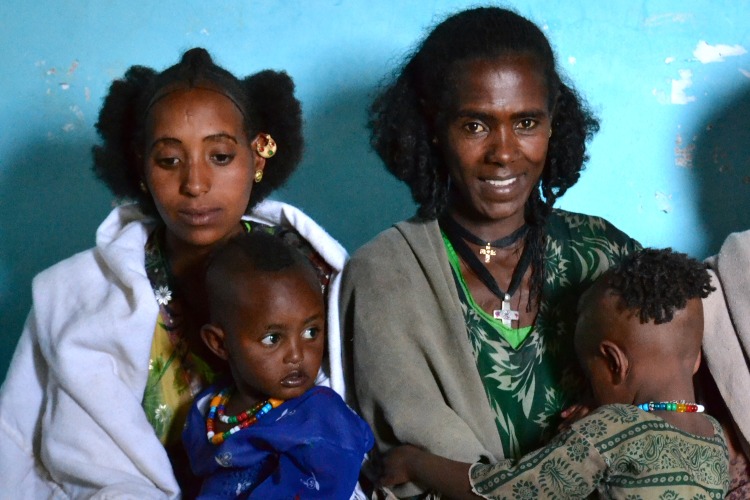
With pasture no longer providing enough nutrition, families are struggling to feed pregnant and lactating animals. For pastoralist households, this has a direct impact on children too — because milk is often their most important source of nutrition.
APDA reports child growth stunting at 46%, while the number of malnourished mothers rose to almost 12,000 by July. In Afdeera and Buurimudayto, 63% and 72% of mothers respectively were affected.
This is why protecting livestock is so important. A healthy animal means milk for a child, food for a family and a lifeline for a pastoralist household.
Delivering urgent support
Despite the enormous challenges, APDA has been working to keep communities going.
In the past six weeks:
- 644 households in severe distress received feed to support five milking goats for 30 days.
- Animal treatment was provided alongside feed assistance, including responses to disease outbreaks in more than six areas.
- Water trucking continues to provide drinking water to communities where other sources have failed.
- Health teams have screened communities for malnutrition across 15 districts and areas.
In one area of northern Eli Da’ar, a solar-powered borehole is supporting around 56,000 people across four sub-districts. Because the borehole can only pump during daylight hours, APDA is providing fuel to run generators at night, helping maintain the water supply.
The next challenge: keeping livestock alive
APDA currently has 820 quintals of animal feed in storage, ready to be distributed across eight districts. But this supply will only last herders for around one month.
To prepare for what comes next, APDA is planting maize and alfalfa to produce a further 1,500 quintals of concentrated animal feed.
There is, however, a two-month gap between the current emergency supplies running out and the new feed becoming available.
Transport is another major challenge. Poor roads, fuel costs and vehicle maintenance make it difficult and expensive to reach some of the most remote communities.
Communities are part of the solution
The meetings with clan leaders have also highlighted something incredibly important: local leadership matters.
Clan leaders know their communities, understand the challenges they face and have the ability to mobilise people around solutions.
They are already taking action — from contributing labour to road construction, to protecting forests and working to discourage harmful practices.
APDA will continue meeting with leaders across northern and southern Afar, listening to their ideas and working with them to prepare for the difficult months ahead.
Building a future beyond the crisis
While the immediate focus is on survival, APDA is also supporting communities to rebuild livelihoods and create new opportunities.
Across Afar, people are farming, fishing, trading and learning new skills. This includes:
- 150 people farming commercially, including 70 women
- 207 former herders now working in fishing
- 202 women engaged in petty trade
- 58 women selling milk in Logya
- 25 women producing washable menstrual pads
- 150 young people supported into petty trade
- 150 young people, half of them women, trained in trades including hairdressing, tailoring, baking and phone repair
- 66 rural cooperatives connected to APDA
- 24 food-growing sites producing crops across areas of 5–50 hectares.
These initiatives are creating pockets of opportunity across a region facing extraordinary environmental pressures.
The goal is to help these pockets of productivity grow — until they connect and communities have stronger, more sustainable livelihoods.
There is no time to wait
The outlook for Afar remains deeply concerning. APDA plans to continue supporting water trucking and fuelling generators through September, while responding to malnutrition, animal disease and the urgent need for livestock feed.
But funding is increasingly limited, and APDA is facing difficult decisions about how to reach all the communities that need help.
The people of Afar are already doing everything they can to prepare for what lies ahead. They are digging roads, building water infrastructure, caring for their animals and finding new ways to earn an income.
Now, they need support to keep going.
With the possibility of prolonged drought stretching into 2027, every litre of water, every healthy animal and every nutritious meal can make a difference.
Together, we can help Afar communities withstand this crisis — and build a stronger future beyond it.
Call us to donate

Contact Us Privacy © Copyright 2026 Ethiopiaid ABN 78821615548
Registered Australian Charity.